AI Chronicles – #11

STASIS

Emory Wall existed in a dystopian world; a world ravaged by environmental collapse and societal upheaval, where the looming shadow of despair obscured the thin veil of hope survivors like Emory still clung to.

Emory had been an astrophysicist, a dreamer in a world that had all but forgotten how to dream. The world lay drowning in a malaise, the very air was thick with uncertainty, the very fabric of existence seeming to fray at the edges. Everything breaking down or already non-functioning. Only a dwindling subset of survival mechanisms remained, tended by a dwindling group of scientists and visionaries, and even to those carefully coddled systems, entropy approached.

As the last remaining hope for humanity’s survival, Emory found himself amongst a group of others, carefully chosen for their skill sets, standing on the threshold of a daunting decision. The planet’s resources had dwindled to a critical point, and the only chance for a future lay in cryogenic stasis—a leap into the unknown, suspended animation for a select few that promised a distant awakening in a time when the world might be healed.

The time for that decision was now. Emory, adorned in a sleek, white jumpsuit, stood in a sterile chamber staring at the cryogenic pod that would soon become either his sanctuary or his doom. The soft hum of whirring machinery did not soothe him. The room, and the sounds, a symphony of the technological marvel of a bygone age was now both potential savior and captor.

A whirlwind of emotions stormed within him—a cocktail of fear, determination, and a flicker of hope that fought to stay ablaze in the darkness. The weight of responsibility bore down heavily upon his shoulders; the fate of humanity seemed to rest upon his decision to step into the pod.

Emory’s mind raced, questioning the implications of his choice and scanning the myriad consequences of his decision.

What if he never woke up?

What if he did and his mind was blank?

What if the world beyond the pod’s doors was even bleaker than the one they left behind?

But, nestled deep within the crevices of his consciousness Emory clung to a belief that whispered of the possibility of a better tomorrow, a belief echoing the words of forgotten souls who once dreamed of a world adorned with possibilities.

Taking a deep breath, he stepped forward, each footfall resonating like a drumbeat in his head, marking his passage into an unknown future. He could feel the chill of its metallic surface against his skin as he entered the pod. He closed his eyes as the lid sealed shut with a pneumatic hiss, the world fading into an eerie silence. Automated delivery systems and monitors attached themselves to his body but he hardly noticed the slight stings of their intrusions as the sedatives that came first began to take hold.

In those fleeting moments before succumbing to cryo-slumber, Emory’s mind whirled. He reflected on the world he was leaving behind—a world ravaged by greed, a world where the echoes of laughter and the vibrant hues of nature had been replaced by desolation. Yet, in the recesses of his mind, a tiny ember of hope still burned brightly—a beacon illuminating a path to an uncertain but tantalizing future.

The last image etched in Emory’s mind was not of desolate landscapes or crumbling cities, but rather the faint glimmer of stars in the night sky—a reminder of the infinite expanse waiting beyond the confines of his current reality.

As stasis enveloped him in its ethereal embrace, Emory surrendered to the void, knowing that in his suspended state, time would slip away, carrying him towards an enigmatic destiny—a destiny intertwined with the fate of a world yet to be reborn.

AI Chronicles – Volume 10

ABANDONED

Let me take you on a journey, a journey back in time, to a place, a house, a house of memories. Such places have a story to tell to anyone who cares to listen, so bear with me.

Our journey begins at the end of a cul-de-sac in a quiet nondescript neighborhood. Here stands a house bearing the weight of memories within its weathered walls. The front yard once meticulously tended, has grown wild with overgrown shrubs and untrimmed grass, hinting at a long absence of care. Layers of accumulated dust and grime coat windows, once gleaming with life, now lifeless and opaque, obscuring the view into the dwelling.

Stay with me as we go inside. Entering is like stepping into a time capsule frozen in an unknown era. The air hangs heavy with the scent of old books and faded memories. In the living room, a worn-out armchair sits by the fireplace, its fabric threadbare from years of use. Next to it stands a side table adorned with a floral patterned teapot and a collection of mismatched cups—a testament to a fondness for afternoon tea sessions, perhaps shared with close friends or cherished family.

Look around you. Faded photographs adorn the walls, capturing moments of joy and laughter. One in particular, a portrait of a younger couple in happier times smiles back from a silver frame on the mantelpiece. Their eyes sparkle with shared dreams and promises of forever. Yet, the absence of a wedding band on the man’s finger and the weathered edges of the photograph suggest that life has taken its toll, leaving behind remnants of a once bright blooming love.

There is a door left ajar in a corner of this room. As we go through, we find ourselves in the kitchen. Here, the faint aroma of spices and aged recipes still lingers. A cookbook, tattered and well-used, lies open on the counter, pages marked with handwritten notes and splatters of ingredients. Overhead, the shelves still hold an assortment of spices from around the world, hinting at a desire for adventure and a taste for exotic flavors. An apron hangs on a hook by the door, as if recently hung there, stained with memories of countless culinary experiments and shared meals.

Did you notice the staircase around the corner in the room we left? Upstairs, a bedroom whispers stories of solace and introspection. The bed, perfectly made but untouched, faces a window overlooking the garden—a sanctuary for quiet contemplation. A writing desk nestles in a corner bearing witness to countless hours spent pouring thoughts onto paper. Ink-stained journals stacked on a shelf chronicle the innermost musings of a soul seeking understanding and meaning in the mundanity of existence.

In a corner of the bedroom, by the window, is another door. It’s closed, but inside is another staircase, less ornate than the one we climbed up to get here. It leads up to the attic. Here, among forgotten treasures and dusty boxes, lie remnants of hobbies long abandoned. An easel stands in one corner, surrounded by half-finished canvases capturing moments of raw emotion and untold stories. A guitar rests against an old amplifier, its strings rusted now, but still resonant, whispering melodies left unplayed for too long.

It’s getting late now, and it’s time to go. As the sun begins its descent, casting long shadows through the windows, the house remains silent, holding onto the echoes of life once lived. Each item left behind is a testament to the person who called this house home—a soul now immortalized in the artifacts of a life left behind.

AI Chronicles – Vol 9

THE JAZZMAN

In the gloomy haze before dawn, Gerald Gubbins stirred in his lumpy bed, roused by an urgent sense of purpose. The air hung heavy with the anticipation of something peculiar, something off-kilter in his universe. He squinted at the alarm clock, its digits casting an eerie glow: 3:27 AM.

Gerald was a man of routines—boring, predictable routines, but this wake-up call was certainly not one of them, and it left him feeling unnerved. He shuffled to the kitchen in his mismatched socks, the cold linoleum sending shivers up his spine. The refrigerator hummed, the only other thing awake in the entire block, maybe the whole town. He opened the door, blinking in the brief flood of light, and peered inside, then shut the door with a grimace. Nothing in there called to him. All traces of sleepiness had fallen away like the leaves on an autumn tree and the bathroom seemed like the next logical stop.

In front of the mirror, Gerald wielded a toothbrush like a magic wand. He stared at his disheveled reflection, the wiry hair sticking out in all directions, resembling a dandelion in desperate need of a breeze. He finished up and dressed hurriedly, feeling an urgent and inexplicable need to go outside.

His wife, Ethel, snored softly in the next room, blissfully ignorant of her husband’s peculiar early morning expedition. Gerald tiptoed past her, careful not to awaken her. A cranky and grumpy Ethel was something he had no desire to confront at this hour. The creaky front door swung open with a groan as he stepped into the chilly darkness and Gerald winced at the sound, loud and disturbing in the silence of the early morning. But Ethel did not wake and Gerald walked down the steps to the street, drawing his coat around him to ward off the cold.

Outside, the neighborhood slumbered under a blanket of silence, disturbed only by the occasional rustle of a raccoon in the garbage cans. A peculiar scent wafted through the air, a blend of wet asphalt, stale donuts, and the distant echo of a saxophone, played by some mysterious musician whose tune seemed quite out of sync with the hour.

Gerald cautiously made his way down the deserted streets, eyes darting nervously at every shadow. He couldn’t shake the feeling that the universe had scheduled an appointment just for him, a clandestine rendezvous in the enigmatic realm before dawn, and he wasn’t sure he would like what waited for him.

As he approached the town square, a flickering streetlamp cast long, distorted shadows that danced around him like mischievous imps. The town clock struck four, its chime echoing through the empty streets, the sound mingling with the eerie melody of the nocturnal jazzman.

Gerald reached the heart of the square, his breath forming misty clouds in the crisp air. In the center stood an ancient fountain, its waters frozen in a perpetual state of indecision. As he circled the fountain, the worn stones beneath his feet whispered forgotten secrets. Gerald did his best to ignore them.

As if on cue, a solitary figure emerged from the shadows shrouding the square. The Jazzman materialized, instrument in hand, a fedora pulled low over his eyes, his silhouette painted against the dim glow of the streetlamp. He beckoned Gerald closer with a flick of his saxophone.

“Mr. Gubbins, isn’t it?” The Jazzman’s voice was a smooth blend of smoke and bourbon.

Gerald nodded, his heart pounding in his chest. “That’s me. Why am I here?”

The Jazzman chuckled, a sound that echoed through the square like the laughter of unseen specters. “You, my friend, are privileged. You have been selected to witness one of the universe’s cosmic jokes.”

The Jazzman raised his instrument to his lips and played a haunting melody, and as the notes spilled out like crystals into the morning air, the fountain began to tremble. Water gushed forth, not in liquid form, but in a cascade of laughter. Laughter that echoed through the empty streets, laughter that reverberated in the stillness of the pre-dawn hours.

Gerald stood there befuddled, as the Jazzman’s tune unveiled the punchline of the joke. The laughter went on and on, and Gerald wondered that it did not wake anyone else. Then he realized that only he could hear it. The laughter was for him alone. In that moment, as the laughter of the fountain mingled with the jazzman’s saxophone and the strange scent of the early morning, Gerald Gubbins couldn’t help but join in the cosmic merriment, realizing that perhaps the universe had a sense of humor after all.

Week 8 of my AI inspired short story project.

THE EMPORIUM OF SENTIMENTS

In a world where experiential emotions, known as sentimotes, had become commodities, purchased like groceries, Olivia yearned for something unique. She didn’t want the humdrum sentimotes available on every street corner. The rarest and most exotic sentimotes were what intrigued her, and there was only one place where they could be found—the mysterious auction house known as “The Emporium of Sentiments.”

The Emporium was a legendary establishment, shrouded in mystique and legend. No one knew who owned it, but whispers of its auctions reached everywhere. This was the place where sentimotes beyond the mundane could be acquired for the right price. These auctions, held just four times a year required an application to attend.

Olivia had heard tales of people obtaining sentimotes so intense their lives had changed forever. She yearned for a genuine experience of courage, a sentimote of bravery that would enable her to face her deepest fears and uncertainties. To her astonishment and delight, her application was accepted.

The night of the auction, Olivia found herself standing inside an ornate building, its interior bathed in the warm glow of chandeliers. The crowd gathered there was a motley mix of eccentric characters, all seeking sentimotes to fill their perceived voids.

The auctioneer, a charismatic figure, presented a series of sentimotes, each accompanied by its own backstory and power. Love that could mend a broken heart, happiness that could make the world seem a better place, anger that could topple empires, and sorrow that could move mountains—sentimotes beyond the ordinary.

Olivia’s heart raced as the bidding process unfolded. The tension in the room was palpable, a heady mix of desire and desperation.

Then, the auctioneer introduced a sentimote of courage, and Olivia felt an indescribable pull. This was the opportunity she had been waiting for. She entered the auction, her heart pounding with every bid as she wondered if the price would rise above her financial limit. Luckily for her, courage was not something in great demand at the Emporium that night. The buyers seemed more interested in sentimotes of the sensory kind. Eventually, the coveted sentimote of courage was hers.

Once home, she activated the sentimote, and as it coursed through her, Olivia felt a newfound strength and determination. Her fears and uncertainties seemed to melt away, replaced by a resolute belief in herself. She could face challenges head-on and make decisions she had long avoided.

Yet, as the days passed, Olivia realized the cost of her acquisition. The courage she had purchased had consequences. It sometimes bordered on recklessness, and the line between bravery and foolishness blurred. She found herself making impulsive decisions, unafraid of the outcomes.

As she pondered the enigma of sentimotes and the worth of her own newfound courage, she began to see them in a different light. She had paid a great price for courage, but it came with a heavy burden. True courage couldn’t be bought; it had to be nurtured and developed within oneself. Emotions earned and cultivated were much more valuable than those simply bought and sold. The most powerful emotions were the ones that came from within, and no auction house could ever provide that.

AI-generated Flash Fiction

THE MEMORY VENDOR

The year is 2035. The world is a different place than it was just a few years ago. Technology has advanced rapidly, and with it has come a new set of problems. One of the most pressing is the issue of memory.

In this new world, memories are a commodity. They can be bought, sold, and traded. There are even black markets where people can buy memories of things they never actually experienced.

This is the world in which Jack lives. He is a memory vendor. He buys and sells memories, both real and fake. He is good at his job, and he makes a lot of money.

One day, Jack is approached by a man who wants to buy a very special memory. The man wants to buy the memory of his wife, who recently died in a car accident.

Jack is hesitant at first. He doesn’t know if he should sell someone a memory of someone they loved so much. But the man is persistent, and he is willing to pay a lot of money.

In the end, Jack agrees to sell the man the memory. He transfers the memory to a small device that the man can implant in his brain.

The man leaves, and Jack is left alone. He feels a pang of guilt for selling the man a memory of his dead wife. But he knows that he is just a businessman. He is not responsible for the way people use his products.

A few days later, Jack receives a call from the man. The man is overjoyed. He says that the memory implant has worked perfectly. He can now remember his wife as if she were still alive.

Jack is relieved to hear that the man is happy. But he is also a little disturbed. He knows that the man is now living in a fantasy world. He is living in a world where his wife is still alive, even though she is not.

Jack wonders if he should stop selling memories. He wonders if he is doing more harm than good. But then he remembers the look on the man’s face when he told him that the memory implant had worked. He remembers the joy and the happiness in the man’s eyes.

Jack decides to keep selling memories. He knows that he is selling people an illusion, but he also knows that he is selling them happiness. And in this world, happiness is a valuable commodity.

(Word count: 299)

Assassin Redux – a flash fiction story

ASSASSIN REDUX

     Salar was waiting to kill somebody. That was his job, the reason he was out here in the woods on a soggy, fog-shrouded night. The rain drifted down in misty veils, obscuring his view of the road. Occasionally, fatter drops, collecting on the leaf edges of the tree under which he sheltered, fell on his hood, spattering in his eyes. He blinked them away without regret. He preferred damp and gloomy weather. His kind of work was always easier in the dark.
He let the sounds of the wood envelope him, straining to hear the unmistakable creak of leather, the mark of his approaching target.
Nothing yet.
He released the breath he had been holding with a gentle sigh, watching it vaporize before him like a small cloud. It wasn’t just damp, it was cold. In spite of his oiled leather cloak, the wind sneaked icy tendrils between the folds, making him shiver involuntarily. He pulled the leathers closer around him, feeling the curved end of the horn bow press under his armpit. Out of habit, he patted the inner pocket of his vest where the bowstring nestled, safe and dry. Wet bowstrings wouldn’t do for tonight’s work.
     Work. He grimaced at the thought of what he did for a living. Looking back at the circumstances that had brought him out on a night like this, he realized that life had brought him full circle. A long time ago, in another lifetime, he had been an imperial courier, like the man he awaited. Now he was nothing but a hired mercenary, hiding his past, killing those whose work and routines he knew so well it had become rote. He took comfort in the fact that he was good at what he did. Better than most. In his new line of work, he had dispatched nine of his former colleagues, though who was keeping count. He was living on borrowed time anyway, a traitor to the Guild of Assassins. He hoped they might think him simply killed in the line of duty but his intuition told him otherwise. The Guild was aware that he had gone rogue and there was only one way anyone left the Guild. Death.
His senses registered a subtle change in the air pressure around him. Something was approaching. Focusing his hearing he pinpointed the soft creak of saddle leather and the faintest whisper of a whinny. Destiny approached.
He extracted the bowstring from his pocket and strung his weapon in a single practiced movement. Picking out an arrow from the covered sheath at his feet he knelt, staring down the road.
His target approached, hunched over his mount, paying no attention to his surroundings.
A fatal mistake, he thought, sighting along the arrow as the figure drew alongside his position.
Then he froze. Something wasn’t right. The rider lolled in the saddle like a sack, loose and uncoordinated.
It was a sack!
Even as he started to turn, he knew he was too late. The Guild had found him.
He felt only a brief stinging sensation as the blade went in under his ribs.  Then his heart exploded.

© Bryan Knower – May 2019

NEVER TRUST A DEMON

NEVER TRUST A DEMON – a dark fantasy

Miriam watched the writhing shape of the demon with unease. She had performed the spell exactly as described in the grimoire. She double checked her position within the chalk drawn pentacle on the floor. The lines were thick and unbroken, her feet anchored within its outlines.
“Let me see you,” she demanded, squinting at the amorphous figure before her. “I can’t talk to a blob.”
“Heh, heh, heh,” the demon rumbled in a pleasing basso profundo. The tone of the voice was unnerving, considering the nebulous shape of its source.
“Now why should I do that?” the demon demurred, shifting its shape. “You might not be able to stand the sight of the real me.”
“I don’t mean the real you,” Miriam replied. “Assume some solid form that I can talk to. You can do that, can’t you?”
“Oh, certainly, I can do that and more,” the soothing bass voice replied. “What form would you like me to take, Miriam?”
“You know my name?” she inquired, taken aback. “How? I never told you that.”
“Oh, we demons have our sources,” the demon replied, a hint of amusement in his voice.
“What else do you know about me?” she demanded.
“Well, let’s see,” said the demon. “Your last name is Price, you are twenty-seven years old and unmarried. You live alone. Your only friends, at least the ones you think are your friends, are the other witches in the Arnost coven.” He paused. “You ‘borrowed’ that grimoire from the coven library, where it is never supposed to leave. You summoned me through its pages, allowing me to access all the information the coven has on you. It’s a lot more than you think.”
The demon exhaled with pleasure. “Satisfied, my dear Miriam?”
Miriam was speechless. She knew she shouldn’t have taken the grimoire from the coven library. But the demon couldn’t know that, but it did. It seemed to know a lot more too. All she wanted was a special push for an Adam Brewer who she had obsessed on for the past three months. Adam Brewer who, to all intents and purposes, didn’t seem to realize she existed.
“I had no idea,” she said at last. “But never mind. I have summoned you and I need a favor from you please.”
“A favor?” the demon sounded amused again. “I’m not in the business of doing favors for mortals, dear Miriam. Why should I indulge you?”
“Because I have the power to bind you,” Miriam replied with some slight trepidation. “The spell that called you here also binds you to me until I release you, so you can’t leave until I let you.”
“Oh, is that so?” the demon said, and the note of amusement had disappeared from his voice. “What if I left? Right now?” There was an undercurrent of menace in his tone now, although the timbre still resonated in the room.
For a moment, Miriam wondered if she had missed something in the incantation. Then she caught herself. She had done it exactly as the book instructed. The demon was faking. He had to humor her until she reversed the spell.
“Let’s not quibble,” she said. “It’s only a very small thing I need you to do.”
“Does it involve a certain Adam Brewer?” the demon inquired with a flash of malice. The amusement had returned to his voice. Also, his form was solidifying, taking shape, changing into something recognizable.
Miriam watched, amazed, as a white rabbit resolved from the gloom, complete with top hat and tails. The rabbit stood on his hind legs and nibbled at his front paws.
“How’s this?” The demon said. “You like my new form? You asked.”
“A rabbit?” Miriam could not keep the disdain out of her voice. “Of all the forms you can assume and you became a rabbit?”
“Well, not any rabbit,” said the demon, wiggling his rabbit ears. “I am a special rabbit. Let me grow a bit and I’ll show you.”
The figure of the rabbit stretched and filled out until it was almost seven feet tall. He was no longer cute but terrifying, and he towered over Miriam like an ominous cumulus cloud.
The demon rabbit smiled, revealing a mouth full of pointed teeth. They glittered like daggers in the light of the many candles Miriam had placed around the room. She noticed for the first time that his eyes were ruby red, like drops of blood.
“There now,” the demon said. “That’s better. I was feeling a little cramped. Now, what can I do to Mr. Brewer for you?”
“I don’t want you to do anything to him,” Miriam whispered. “I want you to make him notice me. You know, like take an interest in me, sort of. Do you understand?”
“Perfectly,” the demon said, rolling his eyes. “How intense do you want me to make him?”
“Oh, not too much. Not over the top,” Miriam replied. “Interested enough to flirt with me and so on.”
“Well, that’s easily done,” the demon said, smiling again, “But I need you to come and stand by me while I set this whole thing up.”
“You mean, come over there?” Miriam was incredulous. “No way I’m stepping out of this pentacle, demon. Not even if you go back to tiny rabbit size. I’m staying right here. You stay over there and do your thing and then we can both be on our way.”
“What, you don’t trust me?” the demon said in an aggrieved tone. “That is the height of rudeness.”
“Why should I trust you?” Miriam was adamant. “I don’t trust demons. All you do is destroy.”
“We say the same thing about humans.” The demon’s voice was no longer deep and resonant. Now it was low and sibilant. “At least, we don’t pretend to be nice while doing it.”
“All I wanted was a favor from you,” Miriam protested. “I meant no harm.”
“Never trust a demon,” the rabbit replied, stretching out its left hind paw. He deliberately brushed it across the floor, erasing part of the chalk line, opening a gap in the pentacle.

© Bryan Knower – January 2018

THE LAST GREENHOUSE IN THE WORLD

images

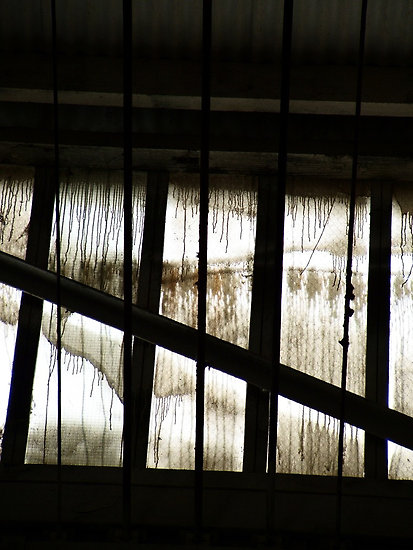
veryshortstories Gabriel looked with concern at the sapling in the corner. Its silver-gray leaves drooped and the plant, not more than four feet tall, projected an overall air of forlornness. Behind the ornate pot holding the plant the transparent panes of a wide bay window showed a murky red sky and rolling brown dunes denuded of vegetation, numbing in monotony. The dullness of the scene had no effect on Gabriel. His whole concern was focused on the plant before him.

Reaching out, he touched one of the leaves with his thumb and forefinger. It was the most delicate of touches but even that slight contact seemed too much for the sapling. It trembled and the leaf came away in his hand, leaving a stark white patch to mark the spot where it had detached from the trunk.
Gabriel inhaled sharply in dismay, examining the leaf in his hand. The top of the leaf was still a handsome silver gray but the underside showed mottled patches of brown and yellow and a spidery pattern of cracks covered the surface like a fine lattice. Even as he watched, the little tree seemed to sway, although no breeze stirred inside the building. Another of the lower leaves detached itself and floated down to join a small group of its fellows in the base of the pot.
Clutching the leaf in his hand Gabriel ran back up the long avenue leading back to his central office from this remote alcove on the edge of the building.
The office was hexagonal and glass-walled, providing a panoramic view of the interior of the building, which was large. From the central perspective, the six sides of the building were clearly evident, a macroscopic version of the office itself. Inside, machines and displays stood banked against the clear walls except for a small curtained alcove providing the only privacy in the entire building. The alcove contained Gabriel’s private quarters, although privacy never concerned him these days. Gabriel was the only occupant of the transparent building.
Hastily he dropped the leaf he was holding into the receptacle of a quietly humming machine and pressed some buttons. The leaf disappeared inside and the machine made quiet regular sounds as it analyzed its input. Less than a minute later a small screen popped up and data began to scroll down its surface. The receptacle popped open again but there was no sign of the leaf. Gabriel glanced quickly at the display and his shoulders sagged visibly.
Two days, he thought. That was all the time the sapling had left. The deterioration was irreversible and permanent. The tree was dying. Sadly he walked back out of the office and onto the wide plaza with its six broad avenues branching out precisely to the six sides of the building. Retracing his steps to the sapling, he stood looking at it, knowing he would have to take it out of the pot and destroy it before it infected any of the other plants nearby. But not yet. There were still two days and he could enjoy its company a little while longer.
Stepping to the clear wall, he pressed his face to the surface and looked outside. The building stood on a bare hilltop whose gentle slopes lead down to a shallow valley. The slopes were bare brown and dusty, the valley a continuation of the same. Beyond, other small hills rose up around him, similarly denuded and desolate, an endless procession stretching out into the distance. Gabriel knew that beyond the hills lay a great plain, equally dry and desolate, scoured by fierce winds that were gradually eroding the hills into dust. A world of perpetual dusk. He had not been outside in more than a century. There was nothing out there anymore. The machines that kept his building alive maintained him too, his circuits recharged and replenished as he rested in the nothing state he had come to call sleep.
But he never really slept. The term was a throwback to his long dead creators who had made him for a very specific purpose. He needed to stay vigilant. That was his imperative. He was the Keeper. The Keeper of the last greenhouse in the world.

© Bryan Knower 2015

TRANSIENT: A Short Short Story

transient02TRANSIENT

Short Short StoryA hazy beam of sunlight throws a vertical swath of light on the wall, making a bright smear on the washed out pattern of the wallpaper. The paper must have been ivory colored once, but now it is a dirty shade of cream, fading to yellowish brown. The peeling edges lift off the wall like the curling dog-eared pages of a well worn book, in places torn to reveal the dull blue of an earlier print. Along the path the sunlight takes as it creeps up the wall, the paper has bleached, evidence of long tenure.

In a corner across from the window, an iron frame bed leans drunkenly against the wall, looking like it might collapse without additional support. The frame was once painted black, but all vestiges of color have peeled away, leaving only bare metal, interspersed with darker splotches of rust that contrast vividly with the incongruous emerald green of the coverlet. The bedspread seems relatively new and the small images of romping cats scattered across the surface seem like a sick joke in contrast to the severity of the room. At the foot of the bed stands a battered brown suitcase, its leather scuffed and scratched. The zippers are broken, the tabs missing and the case is now secured by two straps, curling and worn smooth from much use.

There’s a wooden clothes horse in the left corner, adjoining the window. On its rungs hang a faded pair of blue jeans along with two threadbare grayish t-shirts. The shirts may have been black once, but repeated washing seems to have leached all the color from them.

The other corner hosts a small metal table and a folding chair. Paraphernalia litters the table; a thin length of latex rubber lies like a flaccid snakeskin beside a tarnished silver spoon and a partially used spirit lamp. A disposable hypodermic syringe has rolled to a stop against the lamp, and resting near it is a crumpled scrap of foil paper, an orphan from the overflowing ashtray.

The ashtray, once the property of the Happy Family Peking Diner, is the cheap tin kind that everybody steals. The remnants of a dozen cigarette butts, the unfiltered kind, fill the bowl. The ash tray, once gilded, is now black with the detritus of innumerable mashed out smokes. The smell of stale tobacco fights for supremacy with the scent of Lysol air freshener, creating a strange pungent odor that is not altogether unpleasant.

The sunlight barely illuminates the room, even though it is still early afternoon. The window is grimy, and the inside surface is streaked as if someone has tried to scrub it clean with paper. The outside of the glass pane is spotted and patchy where raindrops briefly liquefied some of the grime before hardening it into a new pattern; layer upon layer of cloudy whorls that filter out most of the light. The view outside is bleak; dominated by the brown brick wall of another building, all the windows shuttered. The light in the room will vanish when the setting sun disappears behind the rooftop of that building.

A single light bulb hangs from the ceiling by a length of wire, as grimy as the window itself. The bulb is bare and unlit. In the wan light diffusing into the room, the wooden floor seems streaked, the result of many repairs that have matched neither the grain nor the type and shade of the wood. The boards look stained and dull, the surface lacquer long since gone and the wood darkened to a chocolate luster with age.

The sound of a jack hammer drifts up through the imperfect window seal, the rhythmic clatter mingling with the sound of shouted voices from out in the hallway. On the other side of the wall, a baby cries, providing a monotonous background to the rhythmic thud-thud of a boom box with the bass turned up loud. The walls are like acoustically permeable membranes, making privacy altogether impossible.

A cheap mirror hangs on the back of the closed door, reflecting the interior of the room in unflattering detail. Above the mirror, someone has screwed in a couple of cheap metal hooks. A white bathrobe, relatively new, occupies one of the hooks, a puffy cumulus smudge against the dull leaden backdrop of the door. It is one of the few things in the room, along with the suitcase and the jeans, that clearly belongs to someone.

Curiously, there are no electrical or mechanical contrivances of any kind in the room. This, added to the lack of furniture, makes the room appear bigger than it really is, an illusion accented by its Spartan emptiness. The entire aspect is one of impermanence, as if the entire room is transient, primed to transform in a moment at its owner’s whim. But there is no living thing here. There hasn’t been for days. Eventually, the landlord will come looking. Come when the pre-paid rent has run out. But by then the Lysol scent will be long gone, replaced by the growing odor of putrescence and the grotesquely swollen foot and ankle protruding from under the trailing edge of that emerald green coverlet.

Bryan Knower 2014

Short short story post-

And The Day PassesAND THE DAY PASSES

The noonday sun scorched his bare head and perspiration trickled across Leon’s scalp, crawling inexorably towards his hairline. He scrubbed his sleeve across his forehead, catching beads of sweat just before they tumbled off his brow and fell into the bottom of his boat. The breeze was out of the northwest and the canvas shelter he had rigged to the cabin provided no shade. He looked at the meager catch in the bottom of his boat, trying to push down the feeling of despair creeping up over him. It was the third day with no major catch now, and he urgently needed something substantial to keep Martha going for the rest of the week
He tried not to think of Martha, lying sick in the little seaside cottage they called home. Even if he got back by early evening, it was an hour’s drive in the old Ford pickup to Puerto Vallejo, where he could sell his catch. The fancy restaurants there paid good money for the big table fish, but those fish were getting harder to find, especially for a lone operator like himself. The developers mushrooming along the once pristine beaches had polluted the bay, driving the big fish out into deeper waters. The ones he caught nowadays were scrawny and undersized. Not worth much on the market, and he was struggling.
In spite of the hardship, Leon liked the life. Lonely, but that suited him. He had come here with Martha twenty years ago to get away from city life and never regretted one moment of it until six months ago, until Martha’s illness. It was scary how she deteriorated before his eyes.
They went to the city to see the doctors, many of them. None of them could provide much comfort. Cancer, they said, and ordered all sorts of tests, keeping Martha confined to a small room, sedated and comatose. She hated the whole process, when she was aware of it, and soon she refused to continue. He agreed.
Six months, the doctors said. Maybe longer if they were allowed to treat her. But for what? A few more months of misery and pain?
So they loaded up on narcotics and drove back to Caravinho, Martha squeezing his hand all the way and the first month had been good again. The narcotics helped and Martha was pain free and full of laughter, like she had always been. But in the past few weeks, the pain came back, and with it the cramps. Leon hated it when he had to leave her in the mornings, motoring out gently past the moorings to head out past the bay looking for those elusive fish. One or two good days might let him stay home the rest of the week but the catch lining the bottom were nearly worthless. Not worth driving into Puerto Vallejo to sell. The restaurants were only interested in prize catch. This stuff was only good for the neighborhood diners, who did not pay. Also, he was not the only fisherman in the area feeling the pinch.
A sudden unreasoning rage swept through him and he kicked savagely at the glittering pile at his feet. Even the contact was insubstantial. They were too slippery to provide much of a target. A beep from his navigation unit caught his attention. He had reached the end of his daily circuit. Time to pull up the nets and see what he had caught. He throttled back and cut the power, turning the small boat into the swells so she would not swamp. Then he walked over to the winch, activating the mechanism that would raise the net, gather it and swing it aboard. The motor whined ground and brought up the gray skeins of nylon from the deep, the bottom bulging slightly with the fruit of his current efforts. Nothing looked substantial there, just more of the same he had brought up all morning.
Swinging the net into the boat, he lowered it to the floor, opening the beams of the winch so he could look into the net. Something bulky and brown, bigger that the rest of the struggling silvery mass caught his attention and he leaned over, hooking it out. It was an old battered suitcase, waterlogged and rotten, nearly falling apart in his hands. Intrigued, he placed it on the floor and pried the lid open. It came up easily, the locks tearing away from the rotted leather panels holding them. Inside was a small package wrapped in plastic, about the size of a paperback book and sealed with tape. It appeared watertight in spite of the state of its enclosure. Curious, he cut the sealing tape and stripped away the wrapping, revealing a small intricately carved box inlaid with many kinds of wood and shell.
Very pretty, he thought, as he stuck the tip of his knife under the lid and levered the box open.
Taken aback by what he saw, he nearly dropped the box. Putting it down carefully on the deck of the boat, he stared again. The contents glittered back at him, catching the refracted rays of the sun and throwing them back into his eyes; all the colors of the rainbow flashing in a prismatic kaleidoscope that dazzled him and made him blink. They were a small handful of beautiful scintillating stones, crystals that flared in the light and tumbled around gently in their bed of crumbling black velvet. All were cut and polished, radiant and glittering; a king’s ransom in the palm of his hand, delivered to him in his need. He looked at the gems for a long time, trying to discern their story, but they glimmered on inscrutably, bright and hard in the sunlight, their secrets trapped like the rays of light imprisoned in their faceted bodies.
He did not wait to roll up the nets as he normally did. Stuffing the gems into his pocket, he swung the boat around, gunning the motor as he sped back to the shore. He felt filled to the bursting with excitement, anticipating breaking this wonderful news to Martha. They could afford all those experimental treatments now; the one the specialist doctors offered; the ones costing so much money. In fifteen minutes, he was back at the little jetty in front of their house, scarcely aware of navigating the shoals at the head of the bay. Leaping out onto the wooden dock, he ran towards the front door, calling out Martha’s name.
It was only a few hundred yards to the door, but long before he reached it, Leon felt something amiss. He felt it in his bones, in the oppressive stillness that seemed to surround the little cottage. The door was open, as it always was, and he pushed through, blinking as his eyes adjusted from the bright sunlight outside to the dimness of the interior. Martha lay in her usual spot, stretched out on the cot under the window where she could watch the seagulls swoop down as they scavenged for food. She always turned to greet him, no matter how weak she was but now she did not move. Leon hurried to her side, his heart growing heavier as he approached.
Martha looked asleep, her face turned towards the sunlight. All the lines had disappeared from her features, as if the care and pain of the past weeks had suddenly left her body. As indeed, they had. She was not breathing. He took her hand in his, fumbling for her pulse, feeling her skin still warm under his touch. There was not even a flutter, although Leon stood there for long minutes, concentrating. Martha had left him. Gone while he was out on the water. Alone at her passing.
Leon broke down then, weeping and wailing in his grief. Then he lashed out with his fists and feet at everything in the cottage, venting his grief in anger. He raged for hours, pacing around the little room, screaming at everything and nothing, until the westering sun began to redden the interior of the room, giving Martha’s pale cheeks a last lingering blush. He paused then, drained and spent, and walked out of the cottage, back towards the beach and the water, which a short time ago had held out so much promise.
He stood at the water’s edge a long time, staring at the water as the sun sank in a flaming ball below the horizon and the afterglow painted infinite reflecting pathways on the darkening billows. The waves rolled endlessly towards him, breaking on the submerged rock mounts inside the mouth of the bay and marching with diminishing intensity to dissipate in froth at his feet. He could feel his former life slipping away with the eddies of the breakers, the shell of his world falling aside like a peeled plum, leaving him raw and bleeding, exposed to the universe. He groped in his pocket and brought out the handful of gems that had seemed the panacea to all his ills a few hours ago. In the fading twilight, the stones had lost much of their luster. They lay dull and quiescent in his palm, their inner fire extinguished.
He should go back inside, prepare for tomorrow, but he lingered. If he stayed where he was, stayed still, time might stand still too. Tomorrow could wait; a small delay in the inevitable of the darkening present.